


Enterprises have spent decades mastering human access, machine identities, and privileged accounts. But a new access layer has emerged — one that’s expanding faster than any governance model built in the last 20 years.
It’s called AI‑to‑AI access, and it’s the identity frontier no one is owning.
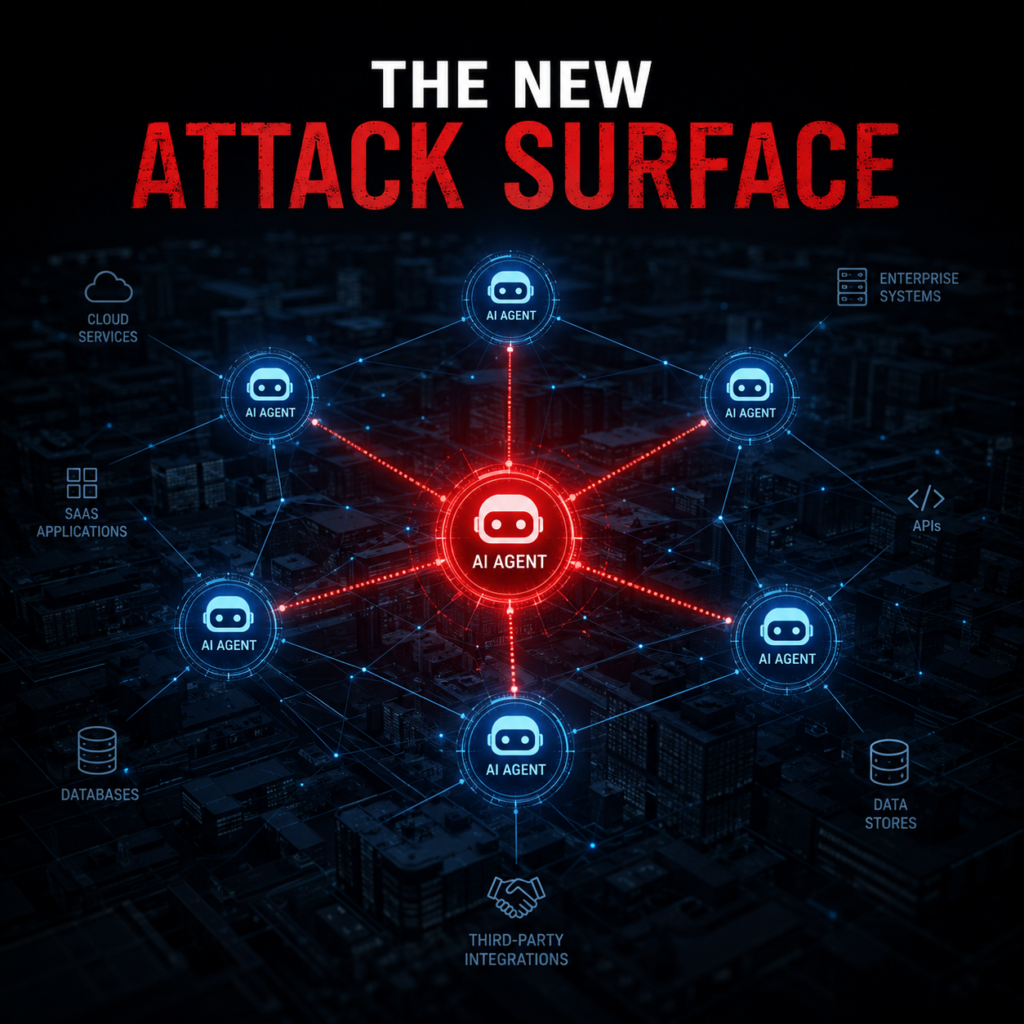
While organizations race to deploy agentic AI, they’re missing the most dangerous part of the transformation: Your agents aren’t just interacting with systems. They’re interacting with each other.
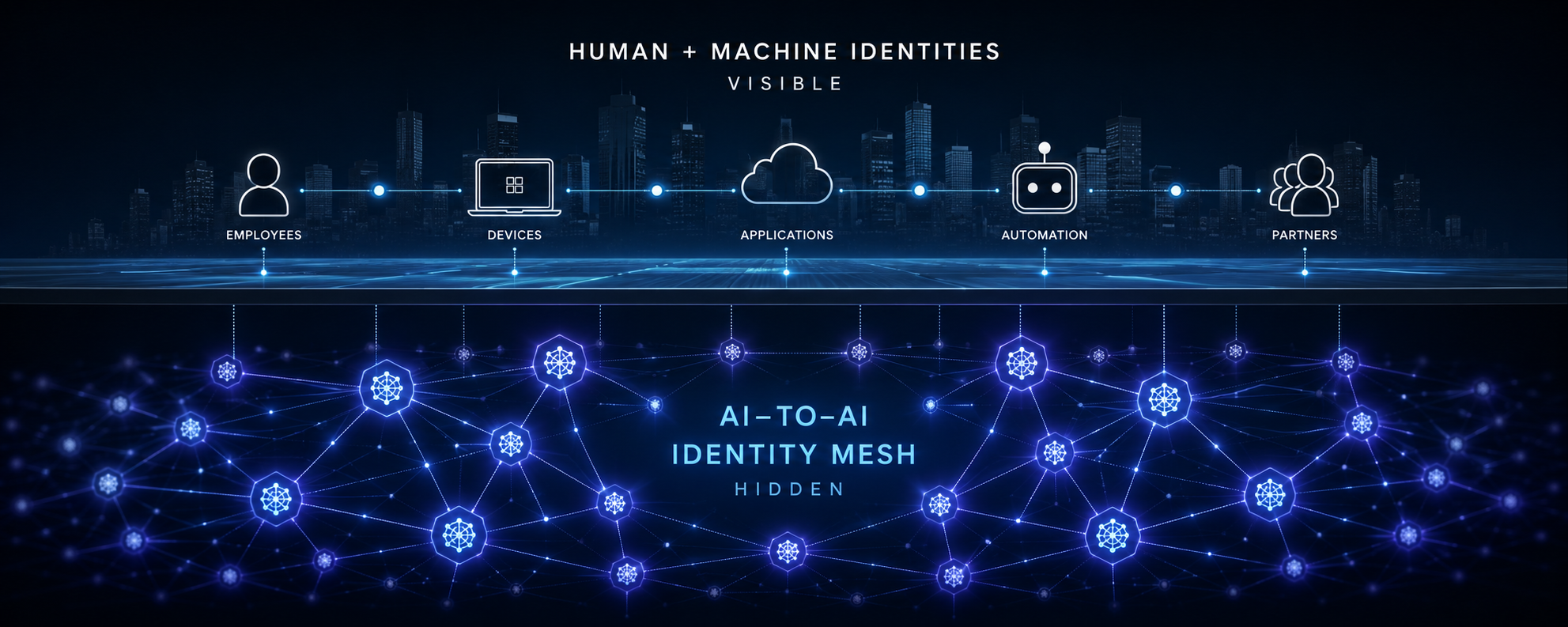
And right now, those interactions are happening without identity boundaries, oversight, or visibility.
This isn’t a theoretical risk. It’s already happening inside your environment.
Why AI-to-AI Access Is Fundamentally Different
AI‑to‑AI access isn’t API security. It isn’t service account governance. It isn’t machine identity management.
It’s something entirely new.
Agentic systems create dynamic, contextual, evolving access patterns that traditional IAM tools were never designed to interpret. When one agent triggers another, passes data, or chains reasoning across workflows, it creates an access pathway that:
– No human approved
– No IAM system mapped
– No PAM vault recorded
– No dashboard visualized
This is the identity blind spot that will define the next decade of enterprise security.
The Hidden Attack Surface: Autonomous Collaboration
The industry is still focused on human‑to‑system access. But autonomous agents don’t operate in isolation — they collaborate.
They:
– Trigger actions in other agents
– Escalate workflows across systems
– Exchange data without human involvement
– Chain reasoning that creates new access pathways
– Learn behaviors that expand their operational footprint
This is AI‑to‑AI access — a parallel identity ecosystem forming beneath your governance layer.
And it’s growing every day.

Why Traditional IAM Fails Here
IAM was built for predictable identities. Agentic AI is anything but predictable.
Your IAM stack assumes:
– Identities behave consistently
– Access is granted intentionally
– Workflows follow linear patterns
– Permissions remain static
– Approvals happen before actions
None of these assumptions hold in autonomous environments.
AI‑to‑AI access breaks every legacy identity model:
– Static permissions can’t keep up with evolving agents
– Manual approvals don’t apply to autonomous workflows
– Quarterly reviews miss thousands of agent‑driven interactions
– Role‑based access collapses when agents create new roles through behavior
– API gateways can’t interpret agent intent
This is why AI‑to‑AI access is the next identity frontier — and why legacy IAM is already outmatched.
The New Privileged Pathway: Agent-Driven Escalation
The next major breach won’t start with a compromised employee. It’ll start with an autonomous agent triggering another agent with permissions no one reviewed.
This is the new privileged escalation path.
AI‑to‑AI access enables:
– Unmonitored privilege expansion
– Autonomous lateral movement
– Behavior‑driven access creation
– Cross‑agent escalation chains
– Identity drift at machine speed
Attackers won’t need to compromise humans. They’ll compromise agents — or simply exploit the access agents already have.
Why This Matters Now
AI adoption is accelerating. Agentic systems are proliferating. And identity is becoming the control plane for everything.
But without governance for AI‑to‑AI access, enterprises are scaling capability and risk at the same time.
This is the moment identity leaders must step in.
Because the organizations that get ahead of AI‑to‑AI access will define the next era of enterprise security — and the ones that ignore it will face consequences far beyond compliance gaps.
How intiGrow + IBM Are Tackling This Frontier
intiGrow and IBM are partnering to build the frameworks, controls, and governance models needed to secure autonomous access ecosystems.
Together, we’re developing:
– AI‑to‑AI access mapping methodologies
– Autonomous identity governance frameworks
– Agent‑to‑agent interaction monitoring models
– Dynamic permission strategies for evolving agents
– Zero Trust extensions for autonomous systems
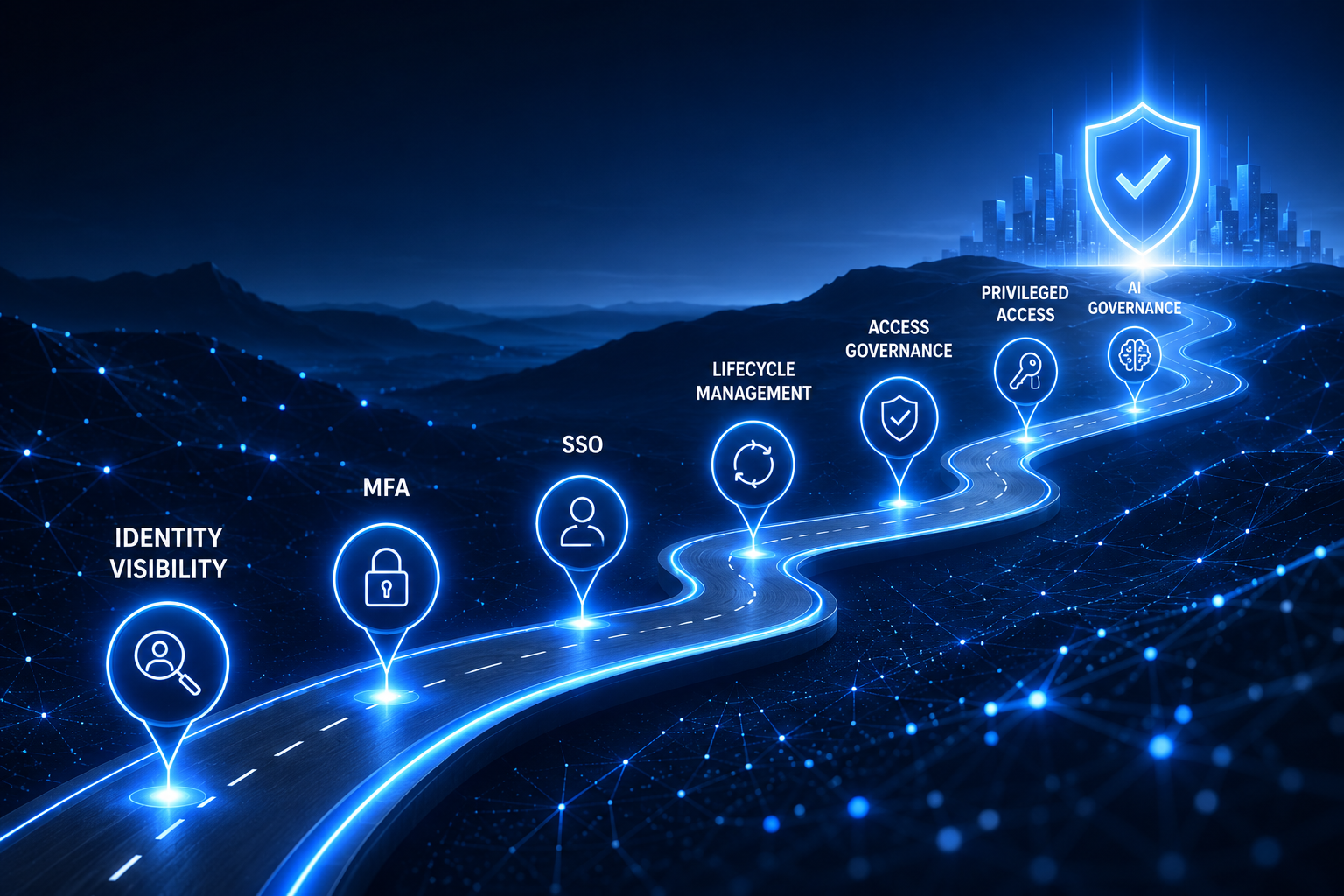
– AI identity maturity assessments for enterprise environments
This partnership brings together intiGrow’s identity innovation with IBM’s AI governance leadership — giving enterprises a path forward in a space where no standards exist yet.
The Identity Frontier Is Here. The Question Is Whether You're Ready.
AI‑to‑AI access isn’t a niche topic. It’s the next major identity challenge — and the fastest‑growing attack surface in the enterprise.
If you’re not governing how agents interact with systems and with each other, you’re not governing AI at all.
Identity must evolve. Governance must adapt. And leaders must act now.
Ready to Assess Your AI-to-AI Access Exposure?
Book an AI Identity Strategy Session and get a clear view of where autonomous access is already forming inside your environment — and how to get ahead of it.
Leave A Comment