

AI Identity Modernization Guide: Why Your Identity Program Must Evolve for Autonomous Systems — Now
AI Identity Modernization Guide: Why Your Identity Program Must Evolve for Autonomous Systems — Now
1. The Identity Model You’re Using Was Built for Humans
Most IAM programs still assume identities behave predictably, request access intentionally, and follow workflows designed by humans. Agentic AI breaks every one of those assumptions.
Agents:
♦ Act autonomously
♦ Chain decisions
♦ Trigger other agents
♦ Expand their operational footprint
♦ Create new access pathways without human involvement
If your identity model is still human‑centric, you’re governing yesterday’s workforce.
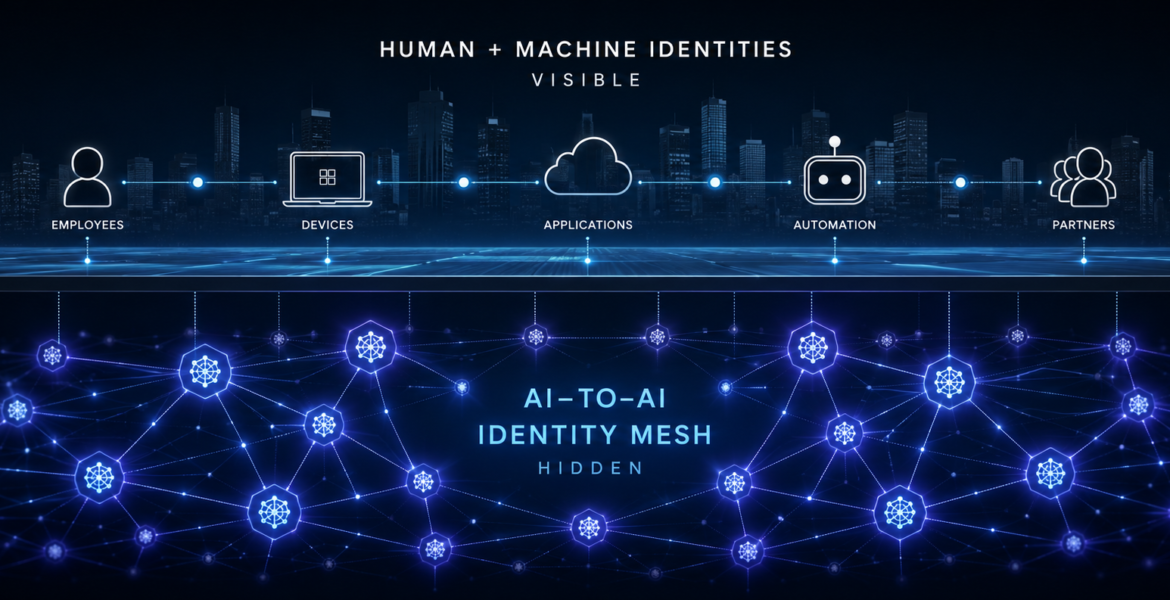
2. AI‑to‑AI Access Is the New Identity Frontier
The fastest‑growing access layer in your enterprise isn’t human or machine. It’s AI‑to‑AI access — agents interacting with other agents.
This creates:
♦ Unmonitored privilege escalation
♦ Autonomous lateral movement
♦ Dynamic access chains
♦ Identity drift at machine speed
♦ A parallel identity ecosystem your tools don’t see
If you’re not governing agent‑to‑agent interactions, you’re not governing AI at all.
3. Why Traditional IAM Fails in Autonomous Environments
Legacy IAM was built for:
♦ Static permissions
♦ Manual approvals
♦ Quarterly reviews
♦ Role‑based access
♦ Predictable behavior
None of this works when identities evolve.
Where IAM breaks:
♦ Permissions stay static while agents evolve
♦ Approvals don’t apply to autonomous workflows
♦ Certifications miss thousands of agent interactions
♦ API gateways can’t interpret agent intent
♦ PAM vaults don’t track agent‑to‑agent escalation
Your IAM isn’t wrong — it’s incomplete.
4. The New Identity Requirements for Autonomous Systems
To modernize identity for AI, enterprises need a new control plane built for autonomy.
Modern Identity Must Be:
♦ Dynamic — permissions adapt as agents evolve
♦ Contextual — access decisions consider agent intent
♦ Continuous — governance happens in real time
♦ Behavior‑aware — access aligns with expected patterns
♦ Autonomous — identity controls operate at machine speed
New Capabilities Required:
♦ Agent inventory & classification
♦ AI‑to‑AI access mapping
♦ Autonomous privilege monitoring
♦ Drift detection for agent behavior
♦ Real‑time policy enforcement
♦ Identity‑centric AI governance
Identity must evolve at the same speed as your agents — or it becomes the weakest link.
5. The Modernization Roadmap (Executive‑Ready)
A practical path for leaders who need to modernize identity without disrupting operations.
Phase 1 — Visibility
♦ Identify all agents
♦ Map AI‑to‑AI interactions
♦ Document autonomous workflows
♦ Detect drift in agent behavior
Phase 2 — Governance
♦ Define identity boundaries for agents
♦ Create autonomous guardrails
♦ Implement real‑time policy enforcement
♦ Establish agent lifecycle management
Phase 3 — Control
♦ Deploy dynamic permissions
♦ Monitor agent‑driven escalation
♦ Integrate intent‑aware access decisions
♦ Extend Zero Trust to autonomous systems
Phase 4 — Maturity
♦ Build an AI identity control plane
♦ Automate governance end‑to‑end
♦ Align AI identity with enterprise risk strategy
♦ Prepare for emerging compliance requirements
AI maturity without identity maturity is a liability.
6. What Leaders Must Do Now
AI identity modernization isn’t optional — it’s foundational.
Immediate Actions:
♦ Audit your agent footprint
♦ Map AI‑to‑AI access pathways
♦ Identify where drift is already forming
♦ Evaluate gaps in IAM, PAM, and Zero Trust
♦ Build an AI identity modernization plan
If you wait for regulators to force modernization, you’re already behind.
7. How intiGrow Helps Leaders Modernize Identity for AI
intiGrow provides the frameworks, assessments, and governance models enterprises need to secure autonomous systems — including AI‑to‑AI access.
Our Modernization Services Include:
♦ AI Identity Maturity Assessment
♦ AI‑to‑AI Access Mapping
♦ Autonomous Governance Frameworks
♦ Drift Detection & Monitoring
♦ Zero Trust for Autonomous Systems
♦ AI Identity Strategy Development
AI identity isn’t a feature — it’s the new foundation of enterprise security.
Ready to Modernize Your Identity Program for AI?
Book an AI Identity Strategy Session and get a clear roadmap for governing autonomous systems — including AI‑to‑AI access.

Leave A Comment