

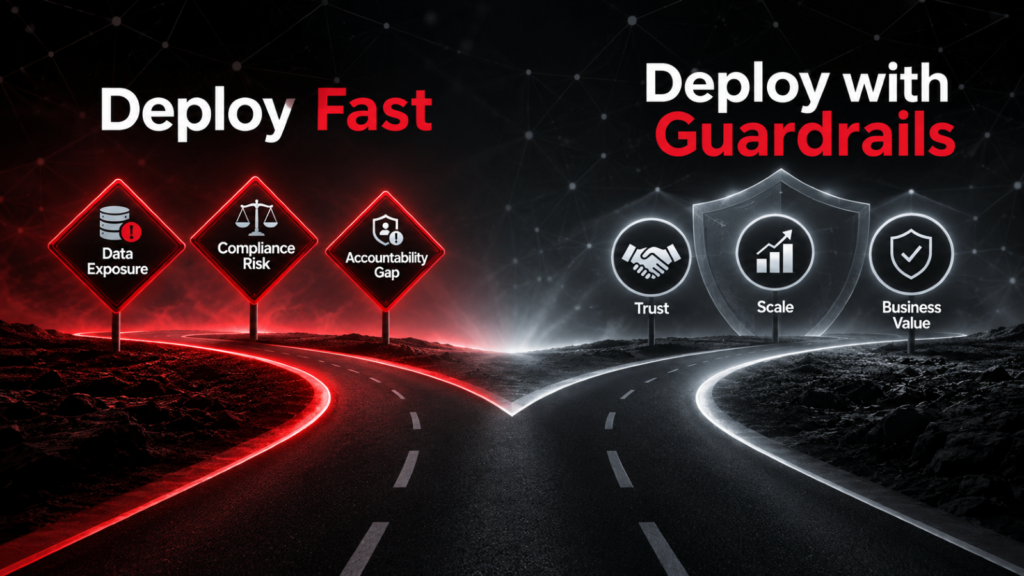
Everyone is talking about AI agents.
Almost nobody is talking about what happens when they start making business decisions. The conversation has moved beyond chatbots and copilots. The next phase of AI is agentic systems that can take action, execute workflows, interact with applications, and collaborate with other agents. Industry leaders are already describing this as one of the defining enterprise technology shifts of 2026.
But here’s the uncomfortable truth: Organizations are racing to deploy AI agents before they’ve mastered governance, security, and accountability.
An AI assistant that suggests actions is one thing.
An AI agent that can approve transactions, access sensitive data, trigger workflows, or make decisions on your behalf is something entirely different.
The companies that win this next wave won’t be the ones with the most agents.
They’ll be the ones that can answer:
✔️Who is responsible for an agent’s actions?
✔️ What guardrails prevent unintended outcomes?
✔️ How is sensitive data protected?
✔️ What happens when the agent is wrong?
✔️ How do we audit decisions after the fact?
Technology history is full of examples where innovation outpaced governance.
The AI agent era won’t be successful because organizations deploy autonomous capabilities.
It will be successful because they deploy them responsibly.
The future isn’t “AI everywhere.”
The future is trusted AI.
Leave A Comment